₦0.00


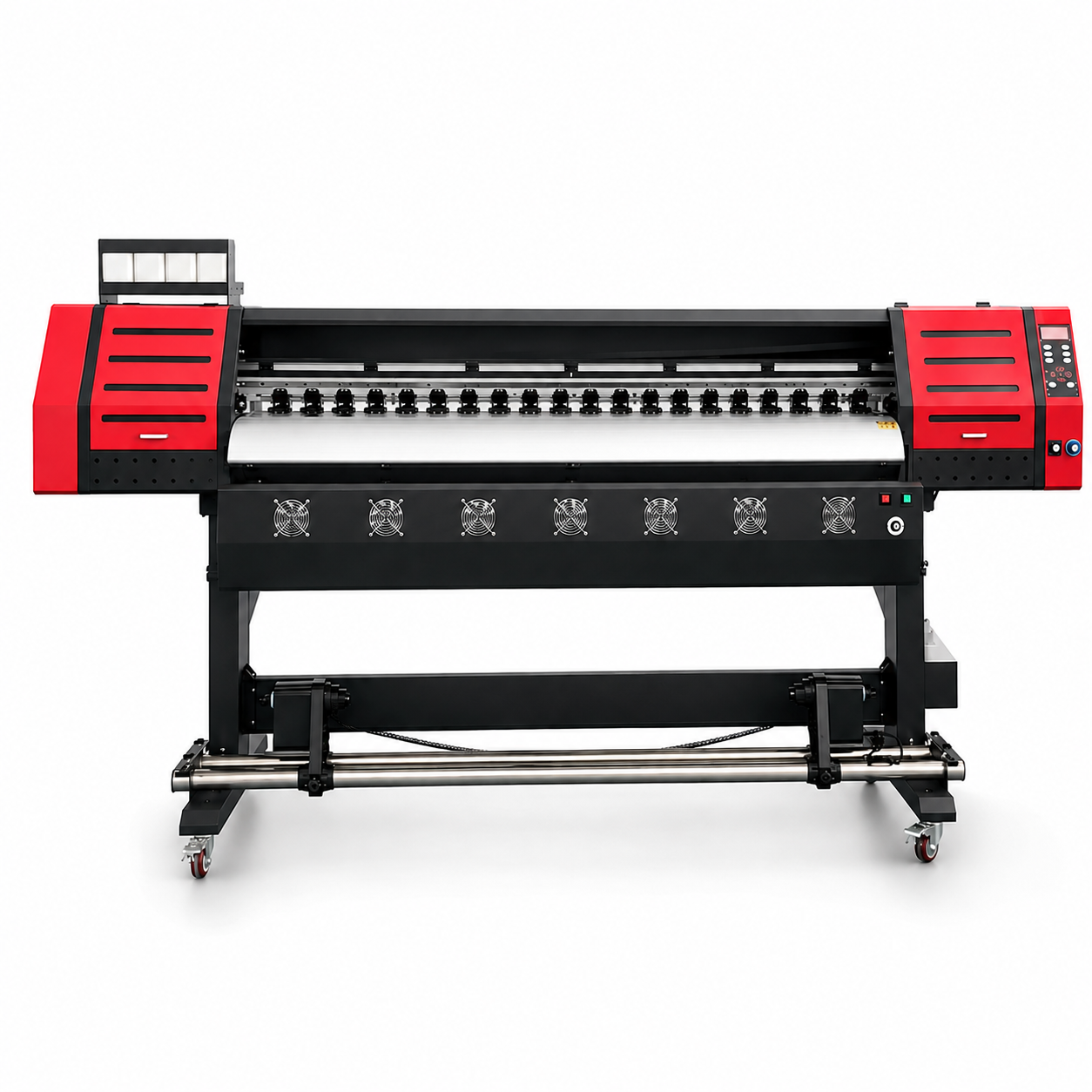
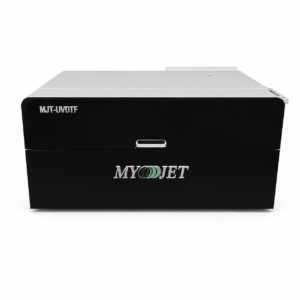
MYJET 30CM DTF Printer
Description
MYJET 30CM DTF Printer
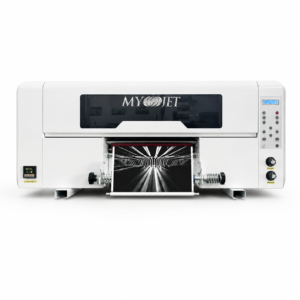
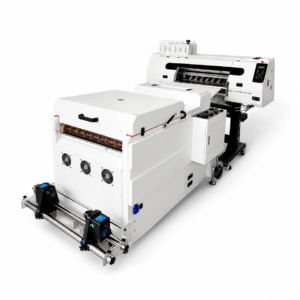
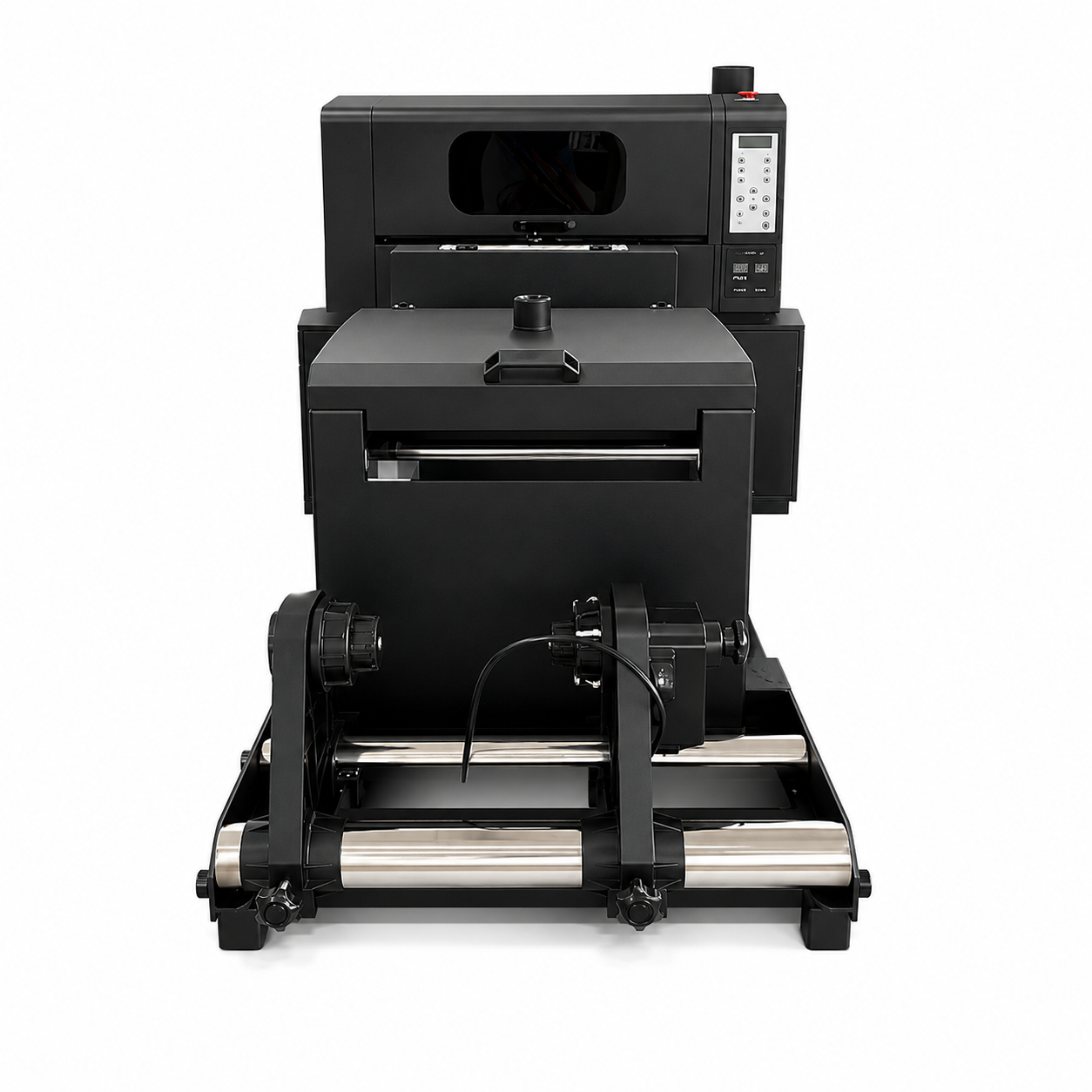
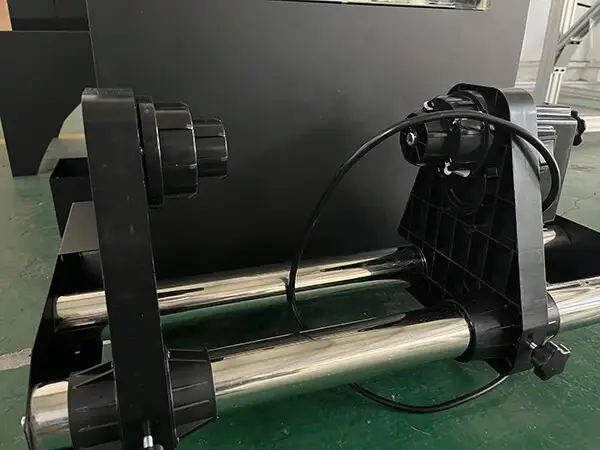
Small studios and startups that want to break into direct-to-film transfer printing without committing to a wide-format machine now have a dedicated entry point: the MYJET 30CM DTF Printer. Built around a dual EPSON I1600A1/XP600 printhead configuration, this compact unit delivers a 300mm (A3) print width alongside a matching automatic powder-shaking machine, giving small businesses a complete print-and-cure workflow in one package.
Unlike bulkier 60cm or roll-to-roll DTF systems, this model is designed for personalization shops, home-based apparel brands, and print-on-demand operators who need dependable output without a large factory footprint.
Precision Engineering for Consistent Transfers
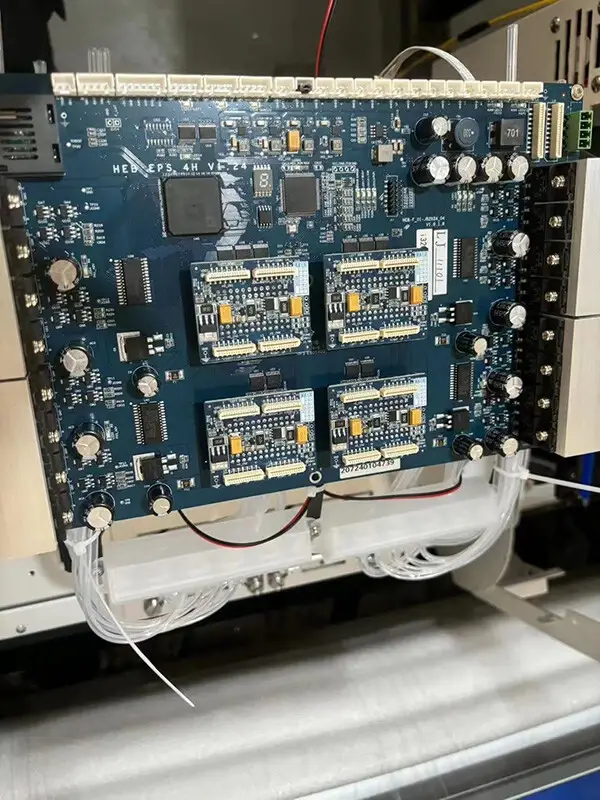
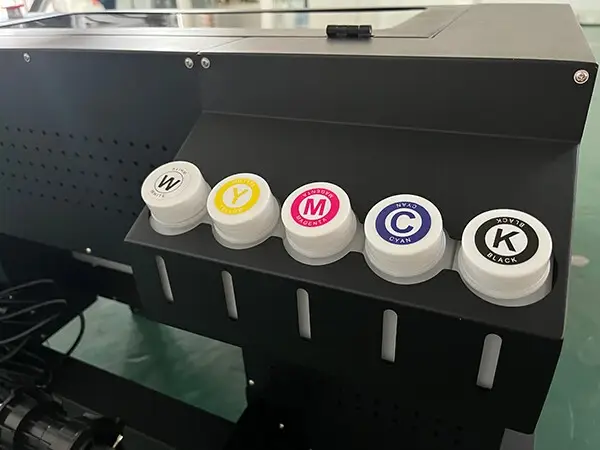
The MYJET 30CM DTF Printer runs on Maintop 6.1 RIP software and reaches print resolutions up to 2880dpi, with speed settings ranging from 2–3m²/hour at 8-pass for premium quality up to 5–6.5m²/hour at 4-pass for faster turnaround. A five-channel ink cartridge system (230ml each, CMYK plus White) keeps color and white ink separated, while a built-in circulation system continuously stirs the white ink to prevent settling — a common failure point in budget DTF machines.
Automated Powder Handling Saves Labor
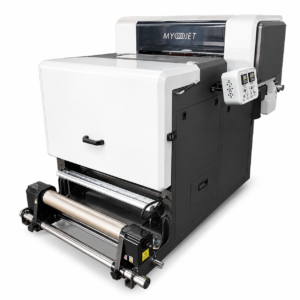
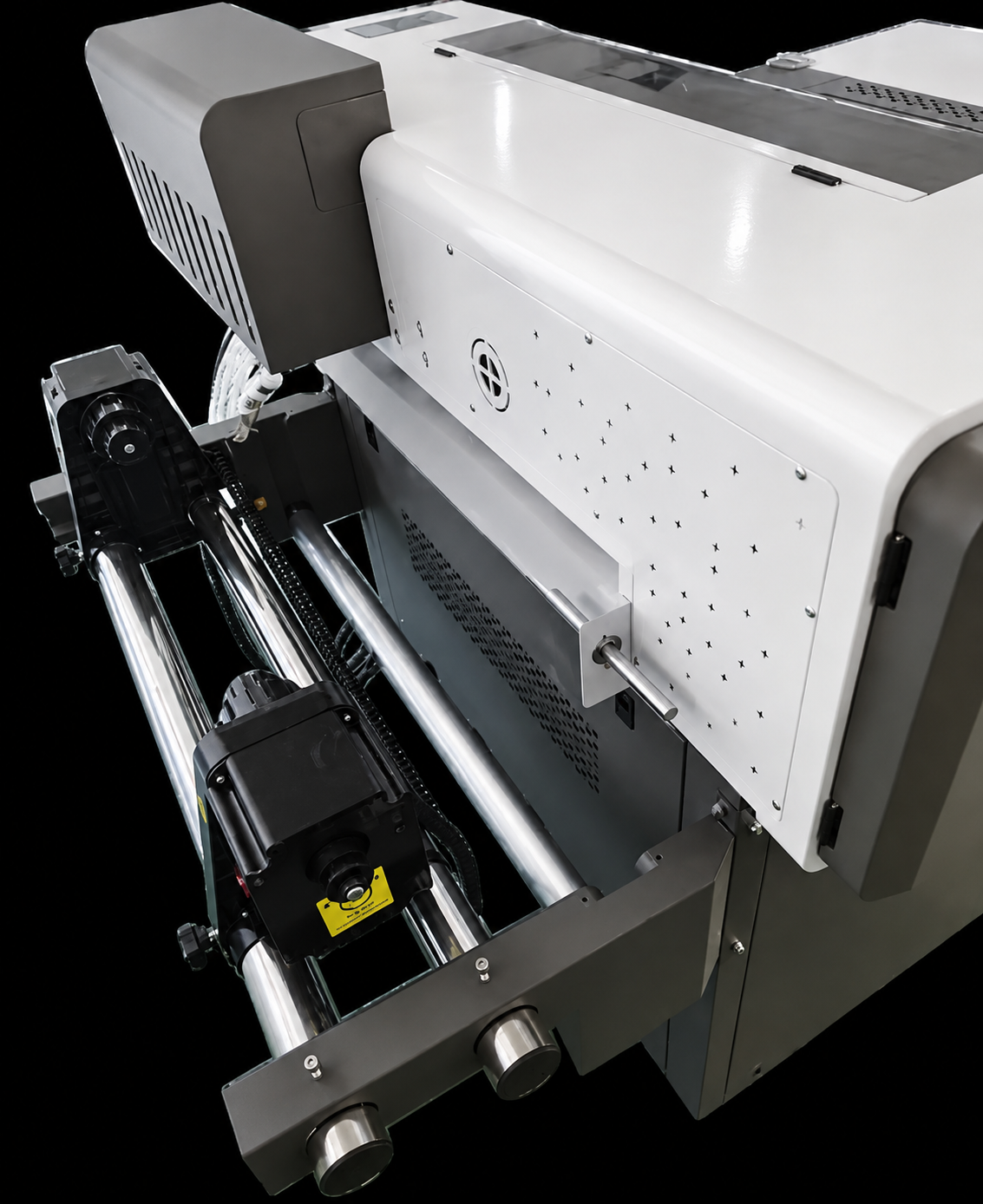
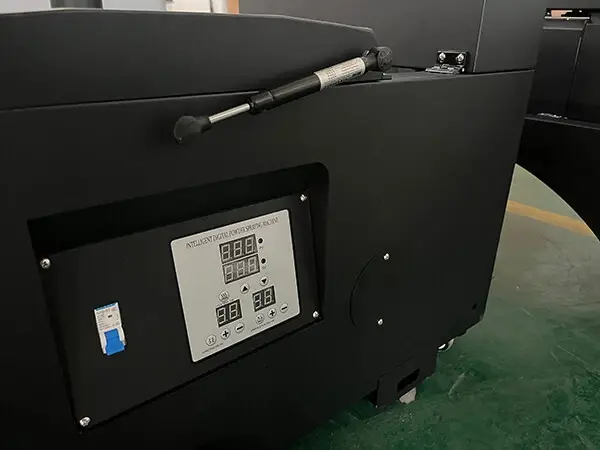
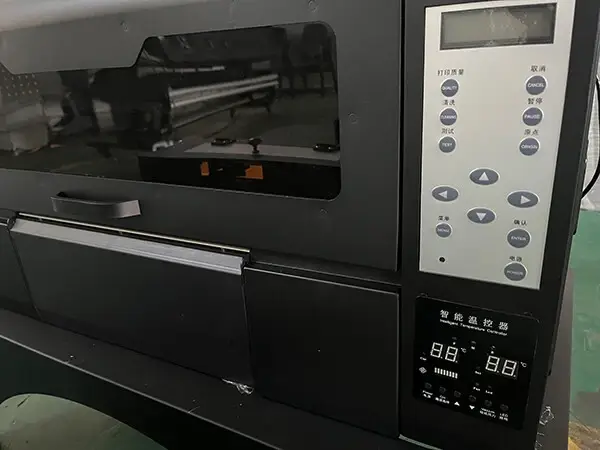
Paired with its own powder-shaking unit, the printer automates the messy part of DTF production. The shaker uses an automatic induction winding function to collect excess adhesive powder, with waste-powder recycling built in to cut material costs. Three heating zones (pre-heat, cure, and post-heat), each independently controllable up to 300°C, ensure the transfer film cures evenly before pressing.
Built for a Range of Fabrics and Materials
Because DTF transfers aren’t limited by fabric color or fiber type, the MYJET 30CM DTF Printer works across cotton, nylon, chemical fiber, leather, swimwear fabric, PVC, and EVA. Finished transfers apply at 160–170°C with a 10–15 second cold peel, and hold up to a 4.5-grade wash fastness rating — suitable for retail apparel, canvas bags, and footwear customization.
H5: Technical Specifications
| Parameter | Detail |
|---|---|
| Printhead | 2x EPSON I1600A1/XP600 |
| Max print width | 300mm (A3) |
| Print resolution | 2880dpi |
| Print speed | 4-pass: 5–6.5m²/h · 6-pass: 3–4m²/h · 8-pass: 2–3m²/h |
| RIP software | Maintop 6.1 |
| Ink configuration | 230ml x5 cartridges, textile pigment CMYK + White |
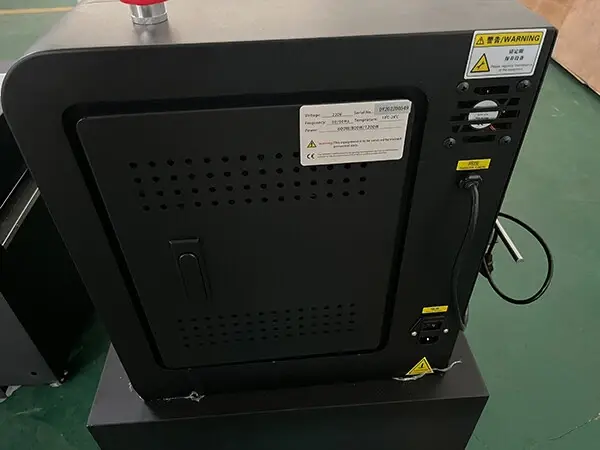
| Power | AC110V/220V, 2300W |
| Transfer temperature | 160–170°C (adjustable, 0–300°C) |
| Heating zones | 3 (pre/post heater, independently controlled) |
| Printer dimensions | 970 x 540 x 450mm |
| Printer weight | 75kg |
| Powder shaker dimensions | 900 x 600 x 580mm |
| Powder shaker weight | 45kg |
| Applicable materials | Cloth, nylon, chemical fiber, leather, swimwear, PVC, EVA |
How It Compares
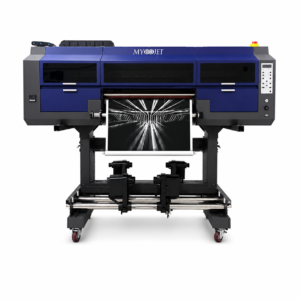
Against the MYJET 60CM DTF, the 30CM model trades working width for a smaller footprint and lower entry cost — ideal for operators printing individual garment graphics rather than bulk yardage. Compared to entry-level A3 desktop DTF printers without a dedicated powder unit, this model’s integrated shaking machine and waste-recovery system reduce manual handling significantly, making it a stronger fit for shops scaling beyond one-off prints.
Frequently Asked Questions
What’s the difference between DTF and UV DTF printing on this model?
This is a standard DTF (textile transfer) printer, not UV DTF. It prints CMYK and white ink onto PET film for heat-pressing onto fabric, rather than curing UV ink for rigid or sticker-style transfers.
Do I need to buy the powder-shaking machine separately?
No — the MYJET 30CM DTF Printer ships as a matched set with its own automatic powder-shaking unit, so printing and powder application work together out of the box.
What film and powder does this printer use?
It uses standard DTF PET transfer film and hot-melt adhesive powder, both widely available from DTF consumables suppliers.
Can it print on dark-colored fabric?
Yes. The dedicated white ink channel with continuous circulation lays down a white base layer, so full-color designs print accurately on both light and dark garments.
How long does the printer take to pay for itself in a small shop?
That depends on print volume, ink costs, and pricing per transfer, but the dual-printhead speed and automated powder recovery are built to reduce per-unit labor and waste versus manual DTF setups.